GTA 6 Will Remember What Kind of Criminal You Are
By Editorial Team — · Updated November 6, 2026

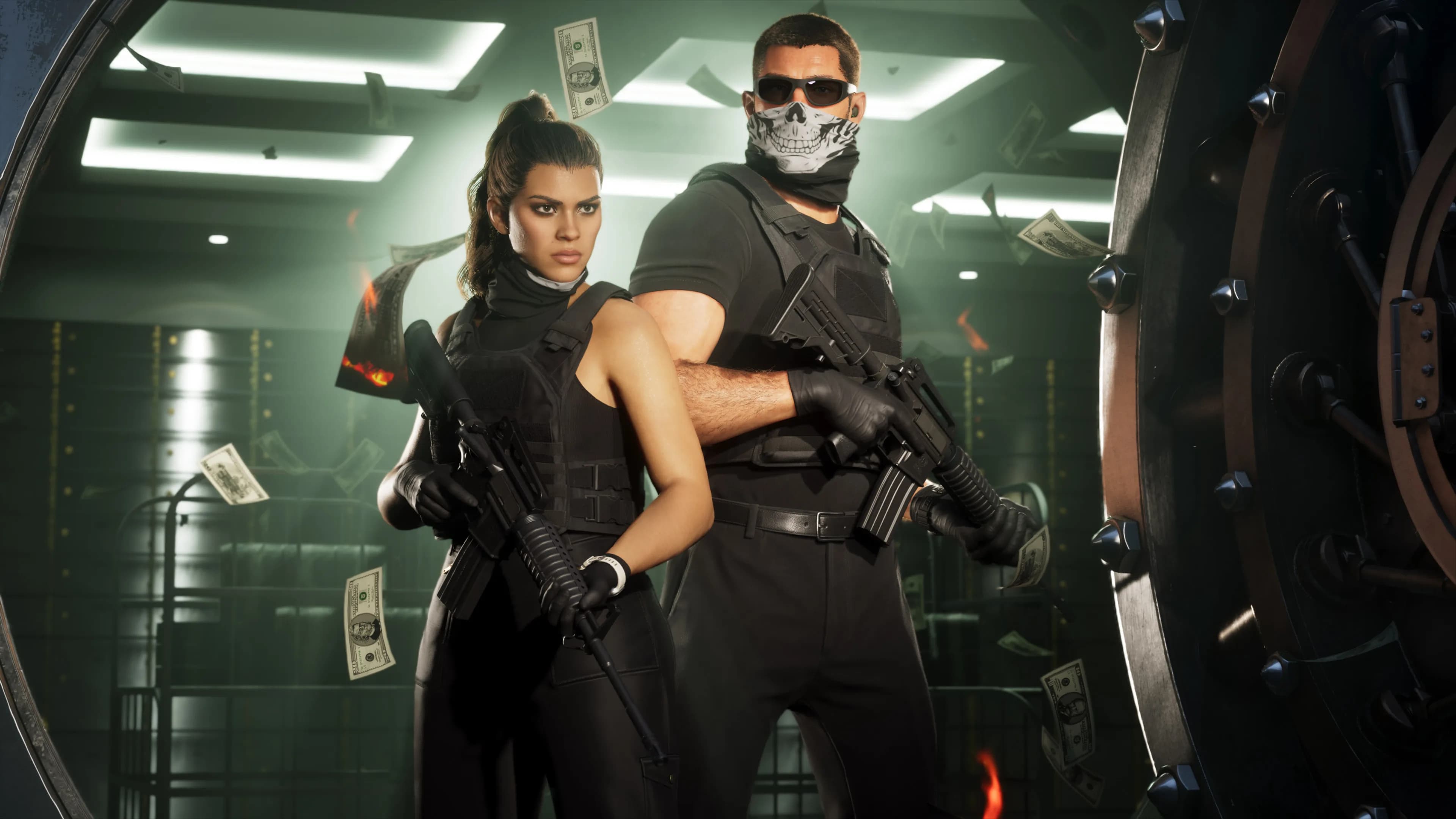
GTA VI promotional image supplied for this article. Image rights/source: to be confirmed.
You finished the job. Then you started a fight you never needed to start.
What if the game remembered?
Grand Theft Auto has always made room for an awkward split between the story you are told and the chaos you create. One minute, a character is trying to escape a dangerous life. The next, the player is testing what happens when a perfectly ordinary afternoon turns into a rampage.
Rockstar has not explained whether arbitrary violence between missions will count toward GTA VI's new Criminal Profile, or whether any particular cutscene will react to it. But the system described in Edge's October 29 preview raises a more compelling question: if the game pays attention to how you commit crimes, what kind of person are you making Jason or Lucia?
Edge reports that Criminal Profile places their conduct on a scale running from "Professional" to "Irredeemable," illustrated with angel and devil icons. Threatening, incapacitating and killing someone are distinct ways of handling an encounter; choosing violence repeatedly can shape the profile. Rockstar says the system will affect how the protagonists' story unfolds.
That is more interesting than simply counting casualties. It asks whether the methods you choose can become part of a character's identity.

The Job Is the Same. The Person Doing It Isn't
Imagine two players approaching the same robbery.
One tries intimidation, takes the money and leaves. The other shoots before finding out whether a threat would have been enough.
These are examples, not a reconstruction of a scene shown by Edge. Both players could complete the same objective. Yet they have performed two very different versions of the same criminal.
This distinction matters because completing a mission and defining a character are not identical things. A checklist asks whether you got the cash. A story can ask what you were willing to do to get it.
The promise of Criminal Profile is not that it turns GTA into a morality lecture. It is that violent choices might be noticed as choices, rather than disappearing the moment the wanted level does.
Exactly which actions are recorded, how the profile changes and which scenes it influences are still unknown. That uncertainty is worth preserving rather than inventing a branching ending.
"Professional" Is a Nasty Little Word
The most revealing label is the one that sounds respectable.
A professional criminal can still frighten people, steal their money and leave them with a story they never wanted to tell. Being efficient does not make the job kind. It merely makes the damage easier to rationalize.
"I only did what was necessary" is an attractive line when you are the person deciding what counts as necessary.
That is why "Professional" is a more provocative endpoint than "Good." The scale does not offer an innocent life as one of its choices. Edge's description makes the underlying premise clear: you may choose what kind of criminal to be, not whether Jason and Lucia are criminals at all.
A player might take pride in keeping operations clean while becoming remarkably comfortable with intimidation. Another might embrace the opposite extreme and discover that brutality has consequences beyond a spectacular firefight.
The interesting part is not deciding which option deserves a gold star. It is noticing the stories players tell themselves about those options.
Rockstar Has Asked This Question Before
Red Dead Redemption 2 gave Arthur Morgan an honor system that linked his conduct to the way his journey felt. Kindness and cruelty did not erase who Arthur was, but they changed how players understood the person he might become.
Criminal Profile appears to bring a related tension into a different genre of fantasy. Jason and Lucia are not trying to become law-abiding citizens through a menu of polite interactions. Crime is already the premise of their story.
The more interesting question is what restraint means inside that premise.
A threat rather than a killing might be practical, merciful or simply faster. The same visible action can carry different intentions for different players. A convincing story does not need to read minds, but it can acknowledge that methods matter.
When a Profile Becomes Homework
There is a less exciting version of this idea.
Players might stop thinking about the people in a scene and start thinking only about preserving a desired profile. Every encounter becomes a calculation: which action moves me closer to the ending I want?
The preview has not disclosed numerical thresholds, a complete interface, a way to reverse a reputation or specific endings tied to the two labels. None should be assumed.
Yet the design risk is familiar. When a game visibly grades behavior, players often learn to optimize for the grade. A supposedly personal style becomes another task to complete correctly.
For Criminal Profile to feel like characterization rather than paperwork, being "Irredeemable" should remain narratively interesting. The game cannot give players a meaningful identity choice while quietly treating one identity as the only acceptable way to play.
It also needs room for inconsistency. A careful plan can collapse into panic. Someone who usually chooses violence can show restraint for a reason that has nothing to do with goodness. Those contradictions are often more human than a perfectly maintained reputation.
The Real Question Is Who Jason and Lucia Become
Criminal Profile could be one of GTA VI's most consequential additions without providing a single new gun, vehicle or district.
Its purpose, if Rockstar makes good on the preview's promise, would be to connect what players do to the people whose lives they are inhabiting.
That possibility is not yet proof of deep branching storytelling. We have a reported system, an announced effect on the story and many unanswered questions about implementation.
But the premise is strong enough on its own.
You can finish a robbery with the money. You can finish it with the money and a body. The mission objective may look identical.
The person who walks away should not necessarily be the same.
And perhaps the most interesting thing GTA VI can remember is not how many people you hurt, but when you decided you did not have to.
Source: Edge / GamesRadar+ (October 29, 2026): Original preview