GTA 6's Most Revealing Gameplay Moment Was a Getaway Gone Wrong
By Editorial Team — · Updated November 6, 2026
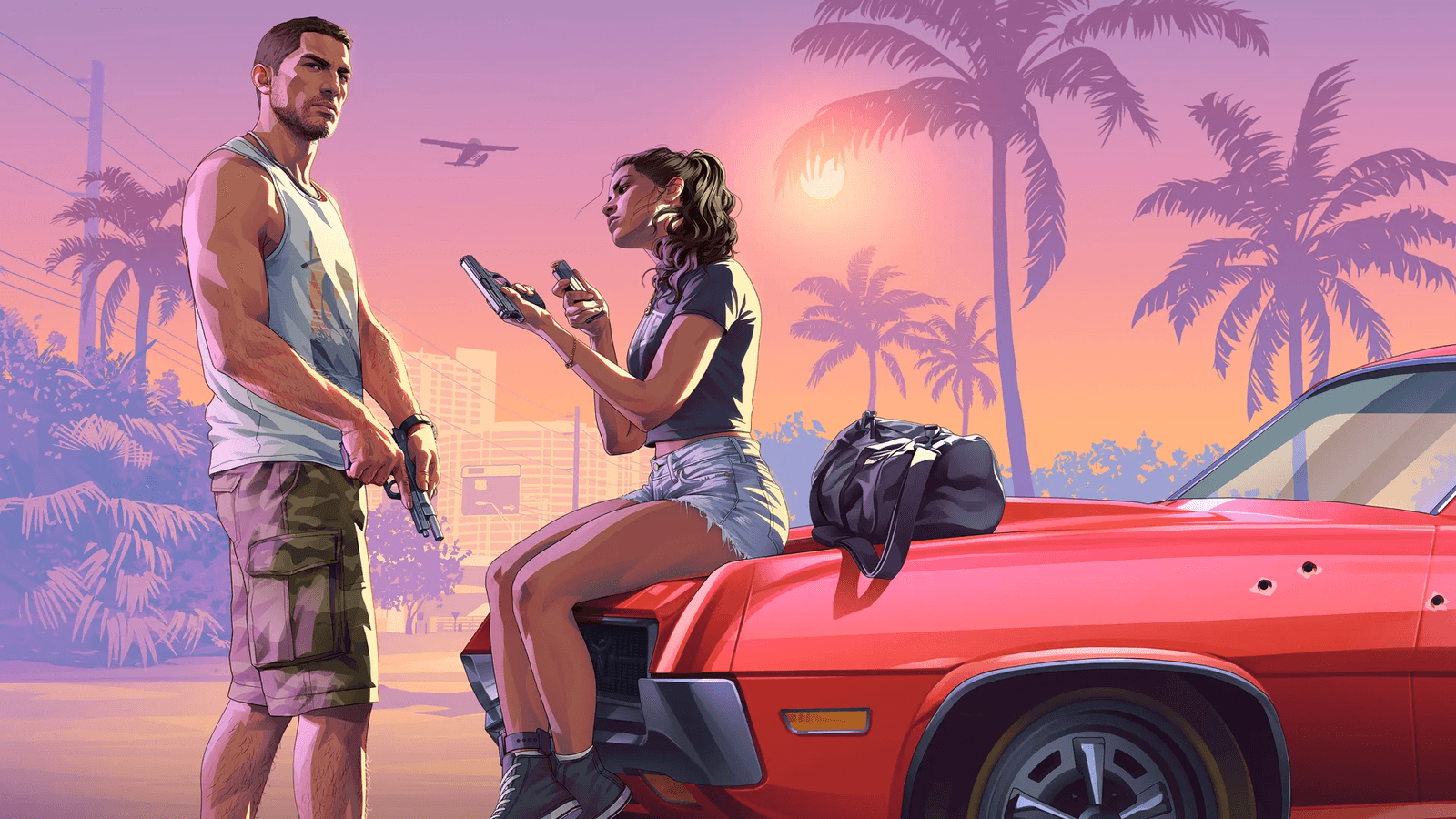
One robbery, a stolen motorcycle, an almost invisible police trap, and a very determined dog. Rockstar's latest demonstration suggests that losing control could be the best part of the chase.
Image: Rockstar Games
The motorcycle is supposed to solve the problem.
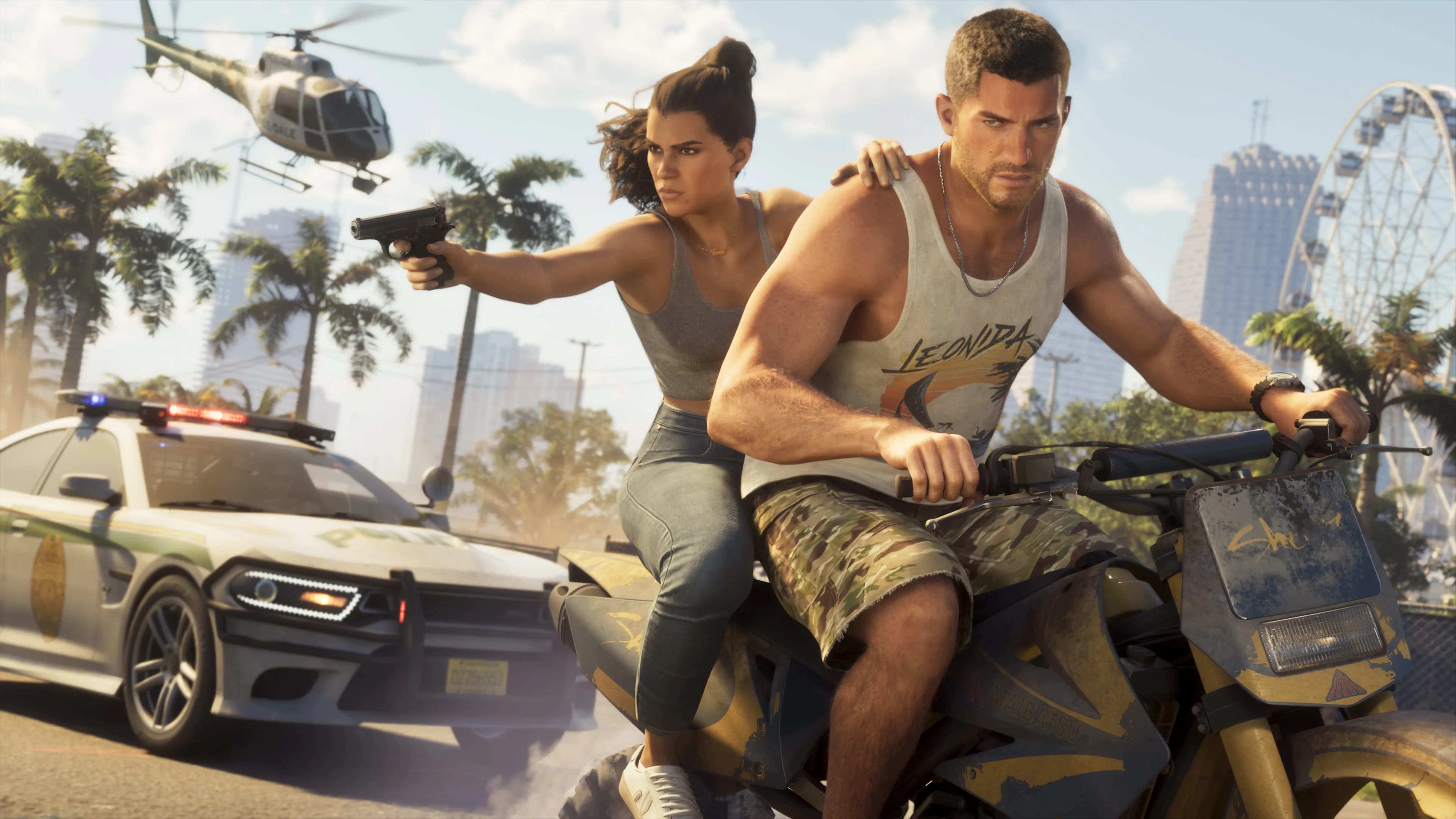
The robbery has already gone wrong. Jason and Lucia need to get away, and a stolen bike offers a reasonable solution: two people, one vehicle, and enough speed to put the police behind them.
For a moment, it works.
Then the front tire hits a police spike strip.
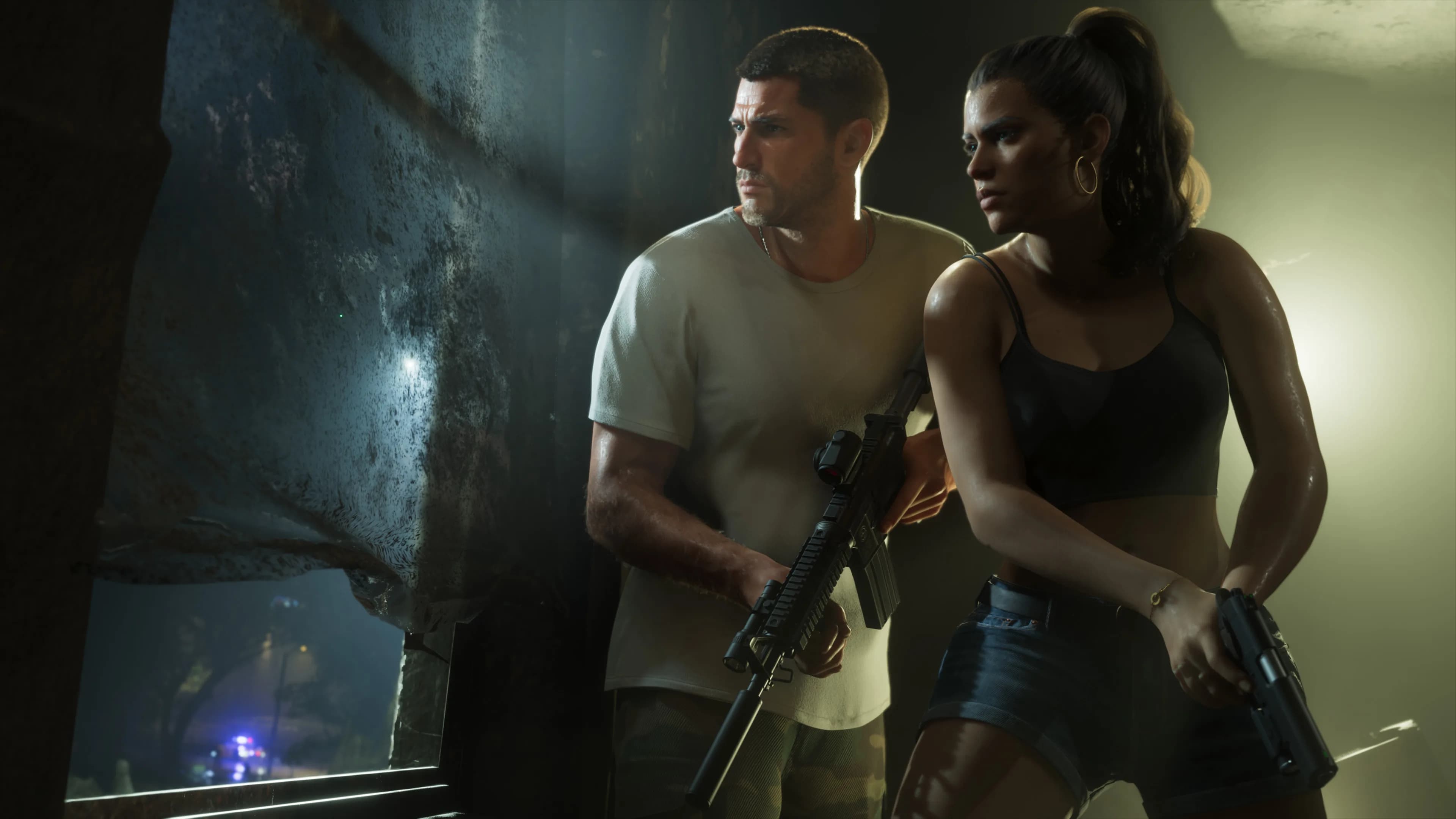
Jason and Lucia go flying over the handlebars, scramble to their feet, and attempt to escape on foot. A police dog catches Jason and pins him to the ground.
And then something almost as entertaining happens outside the game.
The Rockstar developers watching the demonstration urge Rob Nelson, the man holding the controller, not to shoot the dog.
This was one of the encounters described by journalist Simon Parkin in Edge's October 29 preview of Grand Theft Auto VI. Nelson, a head of development at Rockstar, was demonstrating a pre-release build rather than following a published gameplay script.
The sequence lasted only a small part of the demonstration, but it captured something feature lists rarely communicate.
The motorcycle didn't save the getaway.
Its failure made the situation considerably more interesting.
Two People, One Terrible Escape Plan
Before the crash, the pursuit already contains an unusual choice.
Edge reports that players can switch between Jason and Lucia during these escapes. One character can take responsibility for driving under the game's AI control while the player becomes the passenger, free to shoot at pursuing vehicles.
On paper, that sounds like a useful combat feature.
In practice, it creates a division of responsibility.
When you're driving, your attention belongs to the road. You're judging corners, watching traffic, and trying to keep the police from closing the distance.
Switch to the passenger, and the immediate problem changes. You can concentrate on the vehicles behind you, but you're no longer personally making every driving decision.
That trade-off is more interesting than simply adding another weapon to the chase.
GTA has always found entertainment in making players responsible for terrible decisions. Giving part of that responsibility to a partner changes the relationship between control and confidence.
You may decide the police behind you are a bigger threat than whatever lies ahead.
That doesn't mean the road has agreed to cooperate.
The Trouble Was Waiting in Front of Them
Most of the familiar pleasures of a GTA police chase involve putting distance between yourself and whatever is following.
Find a fast vehicle. Take a sharp corner. Lose the pursuing cars. Keep moving until the situation calms down.
The police in Nelson's demonstration had another idea.
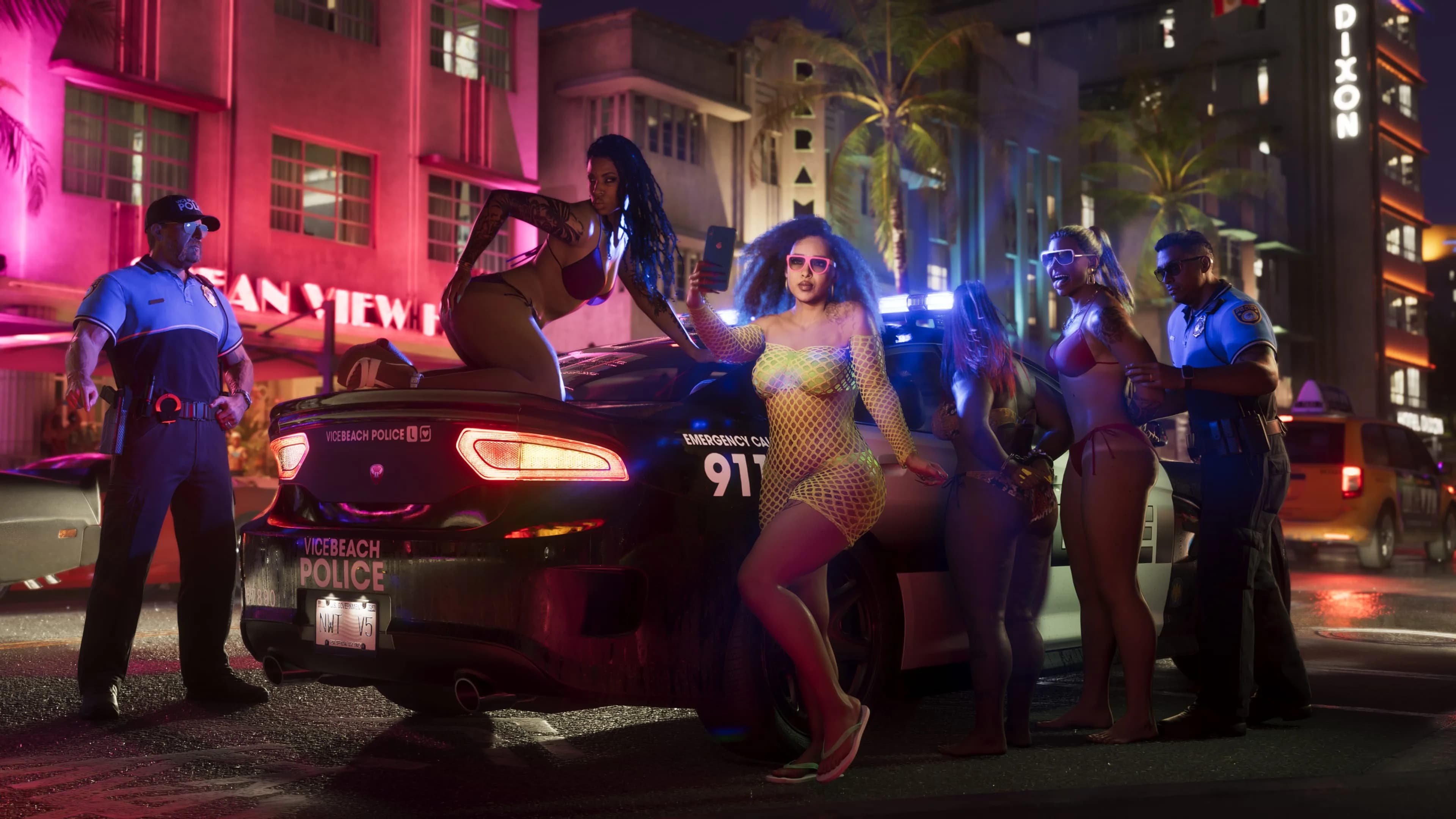
As Edge describes it, officers coordinated over the radio and placed a spike strip farther along the road. Nelson, travelling quickly at night, failed to notice it in time.
One damaged tire was enough to change the entire escape.
What makes this interruption compelling isn't simply that the police had better equipment.
It's that the danger didn't remain where the player expected it.
The chase had encouraged forward movement. The road ahead appeared to offer freedom. Instead, it contained the next problem.
A system like that can introduce meaningful uncertainty. The player has to watch the route, anticipate what officers might do, and decide whether continuing at full speed is worth the risk.
Of course, a trap is only entertaining if it feels possible to recognize or respond to it. An invisible obstacle that repeatedly punishes the player would become irritating rather than exciting.
The demonstration cannot tell us how often these traps appear or how forgiving they will be.
What it does show is a pursuit in which escape is not merely a race against the vehicles behind you.
The environment can turn against you, too.
The Best Part Begins When the Plan Fails
The motorcycle crashes.
That could have been the end of the story.
In many games, a dramatic collision is followed by a familiar interruption: a failure screen, a restart, and another attempt to perform the intended sequence correctly.
Instead, Jason and Lucia get up.
They're hurt. They're moving slowly. The motorcycle is no longer going to help them.
The escape continues, just under much worse conditions.
Then the police dog arrives.
This is where the demonstration becomes more interesting than an impressive vehicle chase. The situation doesn't simply become harder. It becomes different.
The immediate problem is no longer how quickly Jason can drive or how accurately Lucia can shoot from the passenger seat.
Now they're on foot, exposed, and dealing with the consequences of losing their transport.
The original plan is gone. The world hasn't stopped reacting.
That's an important distinction.
A game can create difficulty by repeatedly demanding that players execute the same solution more precisely.
Or it can create drama by allowing one failed solution to produce a new situation.
The first approach rewards mastery.
The second can produce stories.
And GTA has always been especially good at giving players stories that sound slightly ridiculous when repeated to someone who wasn't there.
Even Rockstar Wanted to Save the Dog
The reaction inside Nelson's office is a wonderful detail.
The police dog had caught Jason. The people watching the demonstration urged Nelson not to shoot it.
There's something funny about that moment.
The sequence begins with a failed robbery. It includes a stolen vehicle, armed pursuit, a police trap, and a spectacular crash.
Then everyone suddenly becomes concerned about the dog.
It is a small reminder that an interactive world can make people care about things that don't fit neatly into the objective.
From a purely tactical perspective, a player might think only about escaping.
The developers watching had another priority.
That doesn't establish what Nelson ultimately chose to do, and it doesn't prove how every encounter with a police dog will work in the finished game.
But the reaction itself is revealing.
The people responsible for building this violent fictional world were emotionally invested in how one particular encounter might end.
For a few seconds, the question wasn't whether the robbery would succeed.
It was what the player might do next.
The Real Promise Isn't Smarter Police
It's tempting to take this demonstration and turn it into a checklist.
Police coordination. Spike strips. K9 units. Character switching. AI-controlled partners.
Those are all relevant details, but individually they don't explain why the scene is memorable.
Its appeal comes from the way several systems interact.
An unsuccessful robbery creates a pursuit. The stolen motorcycle offers an escape. The police respond with a trap. The crash forces the protagonists onto the street. The dog introduces yet another danger.
Each event changes the conditions of the next.
That's different from merely adding more enemies or making the police harder to outrun.
A more sophisticated pursuit system should ideally give players more reasons to improvise, not just more ways to fail.
And the most valuable moments may be the ones nobody specifically set out to create.
Edge's wider preview describes other encounters that interrupt the player's intentions, from unpredictable pedestrians to motorists who challenge Nelson to an impromptu street race during another escape.
Those examples suggest that Rockstar is interested in a world that keeps proposing new situations, even while the player is occupied with something else.
The challenge will be making that unpredictability feel exciting rather than exhausting.
The finished game will have to prove it over many hours, not just through one entertaining demonstration.
A Failed Getaway Should Still Be Worth Playing
There is a reason people remember disastrous GTA sessions.
An ordinary successful mission has a clear ending. You complete the objective, collect the reward, and move on.
A badly failed plan can take a stranger route.
You try to escape. Something unexpected happens. You improvise. The improvisation makes everything worse. And somehow, that's the part you want to tell somebody about.
Nelson's motorcycle escape offers an unusually vivid example of that possibility.
Not because it proves GTA 6 will always produce unforgettable accidents.
Not because police dogs and spike strips are revolutionary additions on their own.
But because the demonstration shows how a plan can collapse without the surrounding world immediately running out of things to do.
The motorcycle was supposed to carry Jason and Lucia away from the robbery.
Instead, it delivered them to a police trap, a desperate escape on foot, and a dog that apparently had the entire Rockstar office on its side.
If GTA 6 can make failure this entertaining, getting away might not always be the best outcome.
Source: Simon Parkin, "Grand Theft Auto VI exclusive - The state that never sleeps," Edge / GamesRadar+, October 29, 2026. https://www.gamesradar.com/edge/gtavi-cover/