GTA 6 Lets You Steal From a Police Impound. The Car Can Give You Away.
By Editorial Team — · Updated November 6, 2026
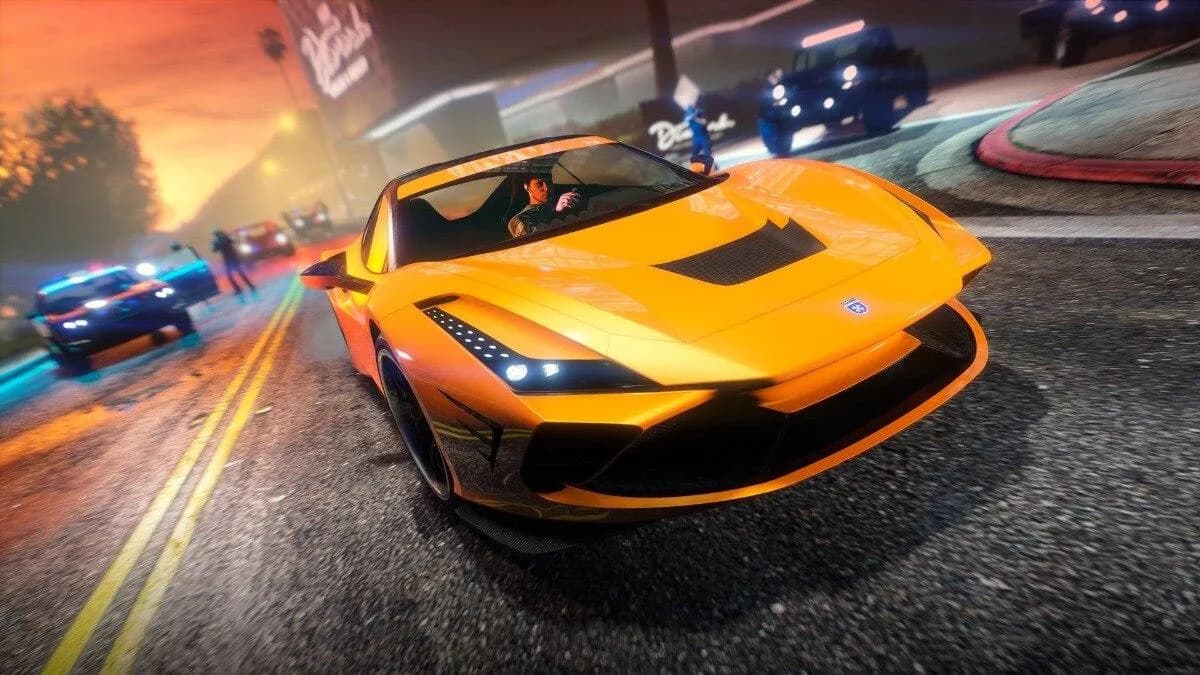
Illustrative image supplied by the editor; not verified as a still from the IGN impound demonstration.
The car is already in police custody. Someone wants you to steal it anyway.
And getting through the gate is only the easy part.
In a GTA VI demonstration for IGN, Rockstar North's Rob Nelson abandoned his original plan to rob a shop, bank, or payday-loan business after the protagonists passed a police impound lot. A car fence had already identified a vehicle inside and given them an entry code. Nelson took the opportunity.
He drove away in the stolen car. The car, unfortunately, had its own idea of where the journey should go.
An advanced tracker could report its position to the police whenever Nelson drove too slowly. The buyer also offered less money for damaged goods. Between those two conditions sat a wonderfully inconvenient challenge: keep moving fast, keep the car intact, and try not to attract more trouble.
That is a more interesting car theft than simply breaking a window and pressing the accelerator.
A detour that became the job
The most revealing part of the impound encounter may be how casually it began.
In the interview, published October 7, Nelson recalled planning a different robbery. Then the impound lot came into view, and he decided to investigate the opportunity the characters had already been given. He said he was pleasantly surprised by the spontaneous callout.
There is a small ambiguity in the published transcript: its scene description attributes the initial observation to Lucia, while Nelson's own account names Jason. The important point is the same. A location encountered during ordinary travel redirected the demonstration.
The fence, the access code, and the targeted car made the opportunity easy to grasp. What we cannot tell from this account is whether the theft is a story mission, a repeatable side activity, or something available only in particular circumstances.
Even with that limit, it is a promising rhythm for an open world: the destination you chose is not necessarily the most interesting thing waiting along the road.
A valuable car is also a liability
Once Nelson had the car, possession became the problem.
Normally, an unwanted vehicle in GTA is disposable. If traffic gets messy, you can leave it and take another. But a vehicle requested by a particular buyer is not interchangeable with the next car parked at the curb.
Nelson explained that this car had an advanced tracker. Slow down too much, and it could ping the police with its location. He did not give a universal speed threshold or say every vehicle tracker behaves this way.
The restriction creates an immediate tension. When things get dangerous, a cautious driver might slow down, find a quieter road, or simply stop and assess the situation. Here, slowing down is itself risky.
The prize has become a moving source of exposure. To keep the reward, you have to keep the risk close.
The road does not care what the buyer wants
The other condition is almost comically unfair.
The fence pays less for a damaged car. Nelson said he could repair it, but the interview does not establish a final repair bill, the size of the deduction, or a completed delivery.
During the getaway, Nelson also encountered a pedestrian and tried to avoid running him over. He remarked that narrower streets and denser traffic made driving more demanding.
The combination is the point. The tracker punishes hesitation. The buyer punishes damage. The streets punish reckless driving.
Each pressure is understandable on its own. Together, they turn transportation into a decision-making problem. A fast shortcut could expose the bodywork to a collision. A patient drive could give the tracker time to report the vehicle. A repair stop could protect the payout but interrupt the escape.
Those routes are examples of choices the system might create, not a reconstruction of Nelson's actual turns. We still need to see how the finished game balances them.
Stealing might begin before opening the door
Elsewhere in the same interview, Nelson described a phone-based vehicle scanner.
It can display details such as locks, alarms, tracking equipment, estimated resale value, and the cost of registering a vehicle for personal use. Certain parked cars also require specific tools, including a slim jim or key cloner.
That information makes car theft feel less like a single button press and more like a judgment. Is this car worth the trouble? Can you open it? Will it be worth keeping, selling, or abandoning?
The impound demonstration starts after the buyer has chosen the target, so it does not show Nelson comparing multiple candidates. But the scanner suggests that other thefts may involve that earlier calculation.
The broader idea is not simply realism for its own sake. It is that a car can have different kinds of value to different people - and different costs to the player.

The getaway is part of the deal
There is a temptation to treat each new GTA VI detail as another feature for a checklist: vehicle trackers, scanners, specialized tools, damage-sensitive payments.
The impound scene is more compelling when those details are considered together. An entry code gets you inside. The tracker complicates escape. The vehicle's condition affects what the buyer is willing to pay.
It is a miniature criminal economy built around one object. The car is not just your means of leaving the scene. It is what the entire job is about.
The account does not show whether Nelson completed the delivery, so it would be wrong to describe a successful payout. And one demonstration cannot establish the variety or long-term appeal of these jobs.
But it gives GTA VI a good, specific dilemma.
You have managed to steal the car from the police. Now you need to drive fast enough that they cannot find it - and carefully enough that somebody still wants to buy it.
Primary source: IGN - GTA 6: The Big Interview (October 7, 2026)